PepsiCo · CPG · Forecasting & execution
Three trackers, one shell — and what happens when the forecast gets an opinion
Redesigning PepsiCo’s legacy New Item and Forecast Tracker apps for Quaker, Gatorade and Juice Plus — then asking what they would look like now that the forecasting behind them has become predictive.
The challenge
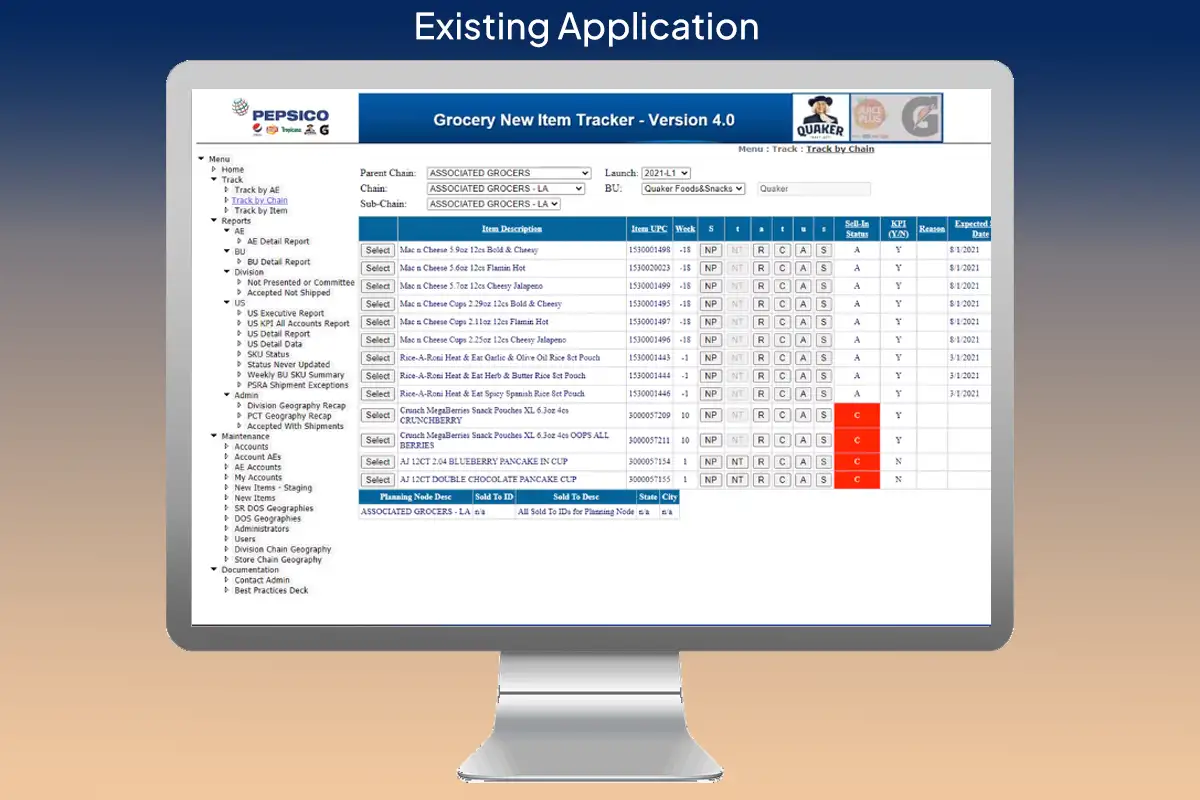
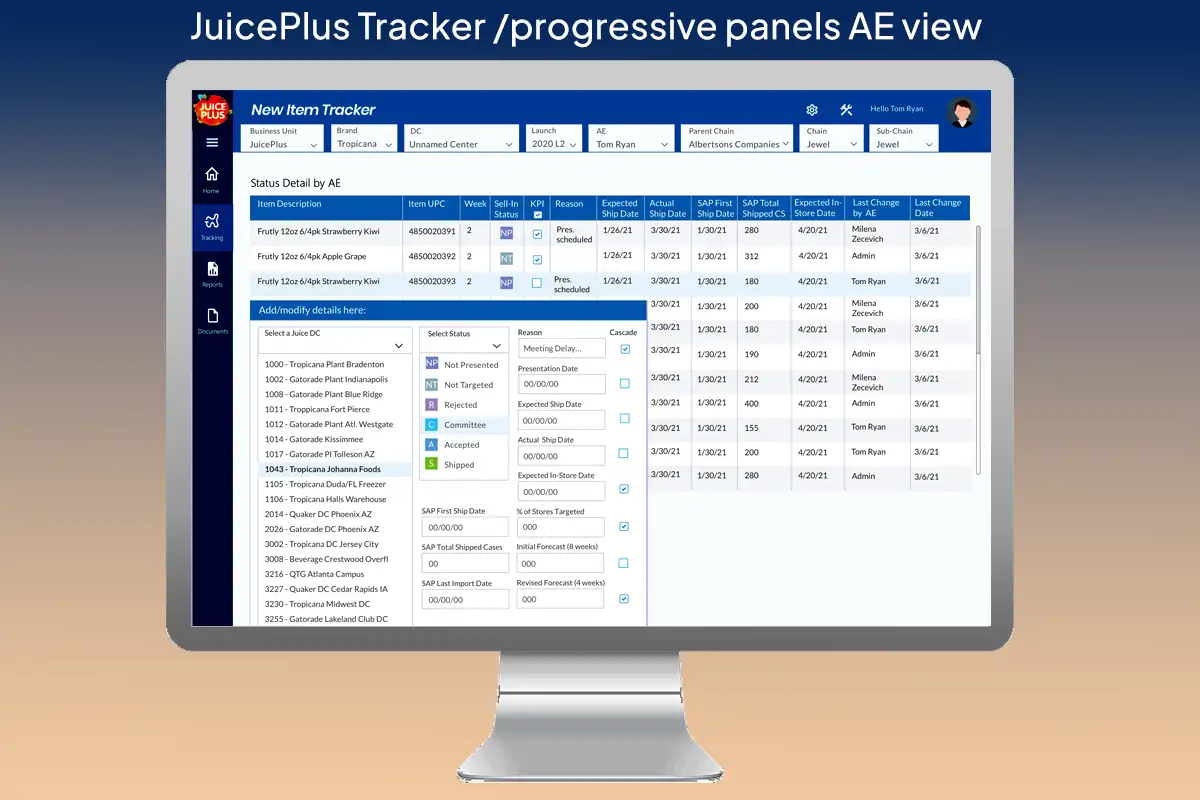
PepsiCo’s legacy New Item Tracker, Quaker Forecast Tracker and Gatorade Forecast Tracker had been built by a product manager with no design background. They worked, after a fashion, but they lacked branding, consistency, usability and any connection to one another — three separate tools for people whose jobs ran across all three.
What I did
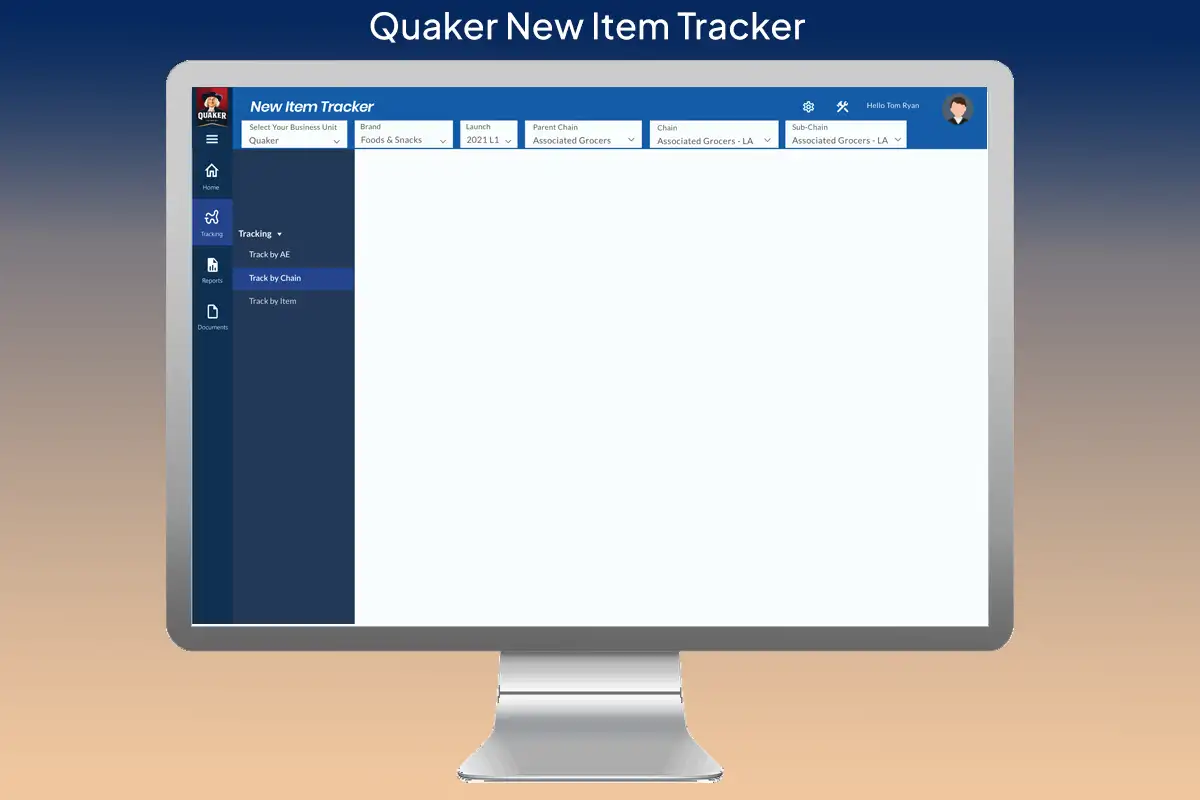
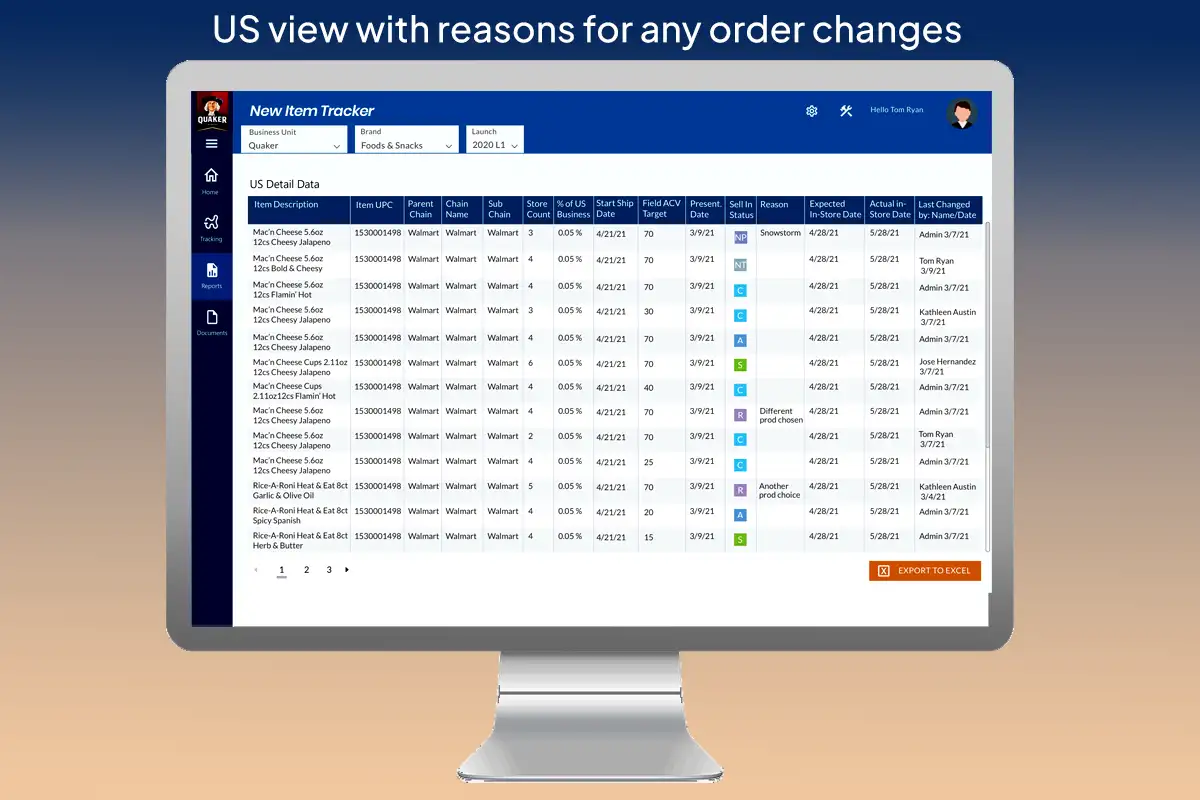
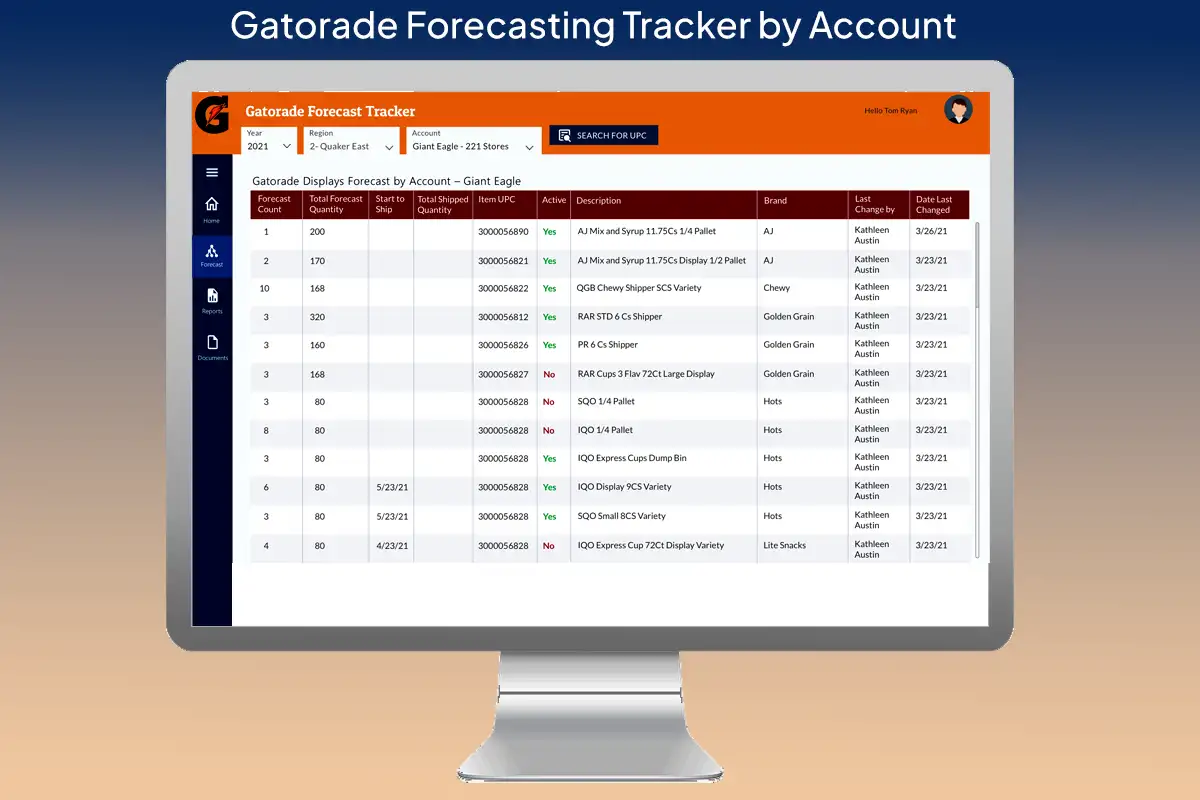
As principal UX/UI designer on a team of eight, I worked closely with the product owner to understand the content, the usage patterns and the user roles — account managers, account executives, store managers and admins. I then designed a single usable interface across all three brands, pushing Power Apps as far as it would go for functionality and consistency while letting each PepsiCo brand keep its own identity.
What came of it
- User satisfaction reached 100% among the key group of account, product and store managers
- VPN was no longer needed to use the tools
- Forecasting was simplified and the interface became genuinely intuitive
- Account and store managers got easier, more accurate forecasting for both immediate and longer-term product needs
Reimagined: an AI-assisted concept, 2026
PepsiCo now forecasts roughly 125 million weekly combinations across direct-store-delivery, warehouse distribution and e-commerce fulfilment, blending AI-driven demand models with direct retailer data-sharing — at a scale the 2020 trackers were never built for.
Which raises a question the original brief never had to answer: what would it look like if that intelligence reached the account executives and store managers actually working the shelf, instead of stopping at the forecasting team?
The concept I designed
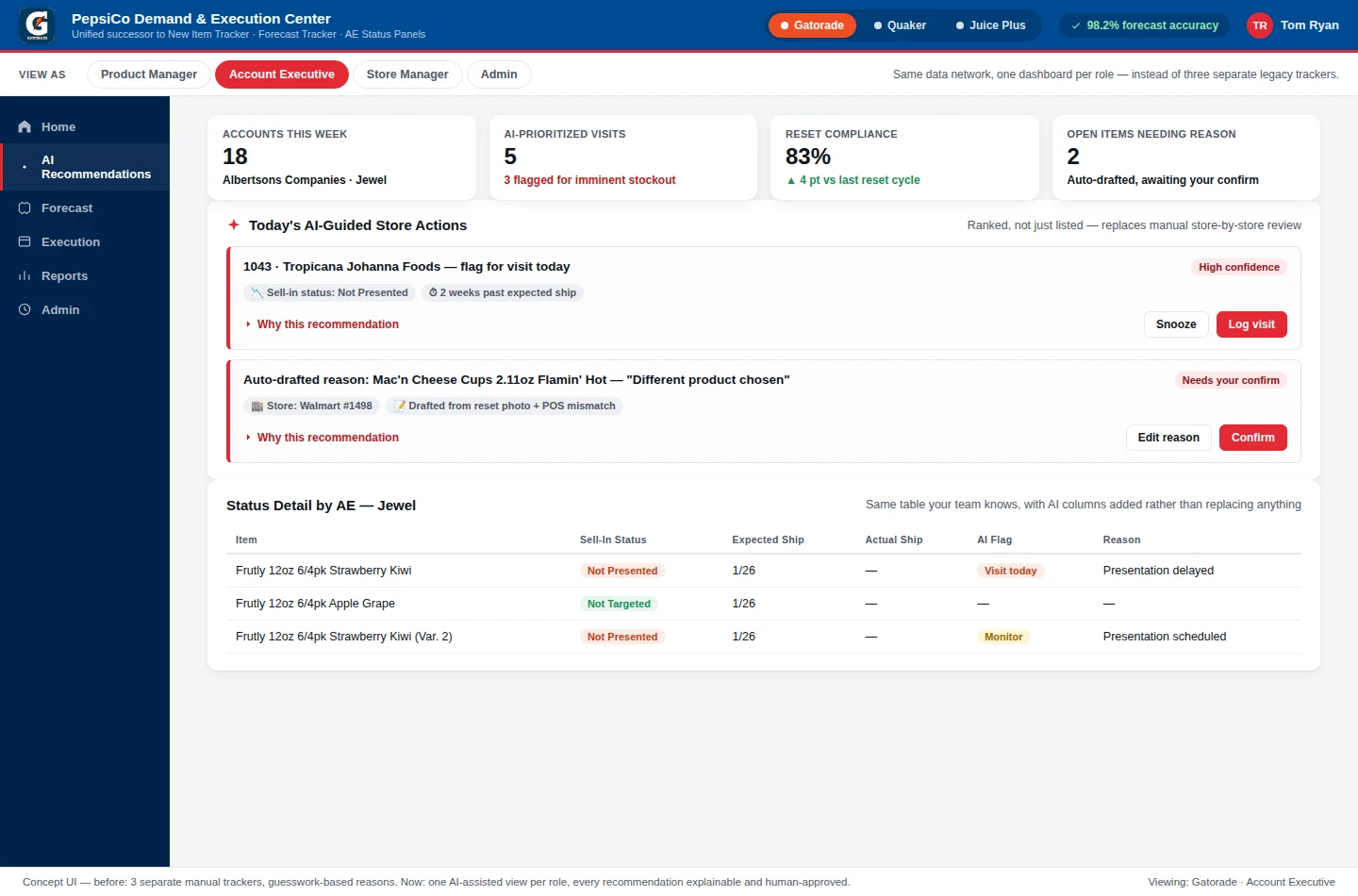
For my AI-for-UX-design coursework I designed a concept successor to the three legacy trackers: one role-based dashboard — Product Manager, Account Executive, Store Manager, Admin — surfacing AI-generated recommendations such as regional demand shifts, predicted stockouts and auto-drafted variance reasons.
Each recommendation carries the reasoning behind it and a required human approval step before anything posts. That last part is the throughline in my recent work: designing accountability and human oversight into AI-assisted systems where being wrong is expensive. Each brand keeps its own logo and colour identity, unified under one shared shell rather than three disconnected apps.
Interactive prototype
Switch between the four roles and the three brands to see how the same recommendation engine surfaces differently depending on who is looking at it — and where the human approval step sits in each case.
Open the prototype →Vision
This is a concept exploration, not a shipped feature — a look at how the legacy trackers could evolve now that PepsiCo’s own forecasting stack has moved toward predictive, explainable AI. The 2020 work was about making three neglected tools usable. The concept asks the harder question: once the system has an opinion about what should happen on the shelf, who checks it before it acts?