ReactiveCore · AI / Knowledge Engineering · Ontology Design
AI Metadata Factory
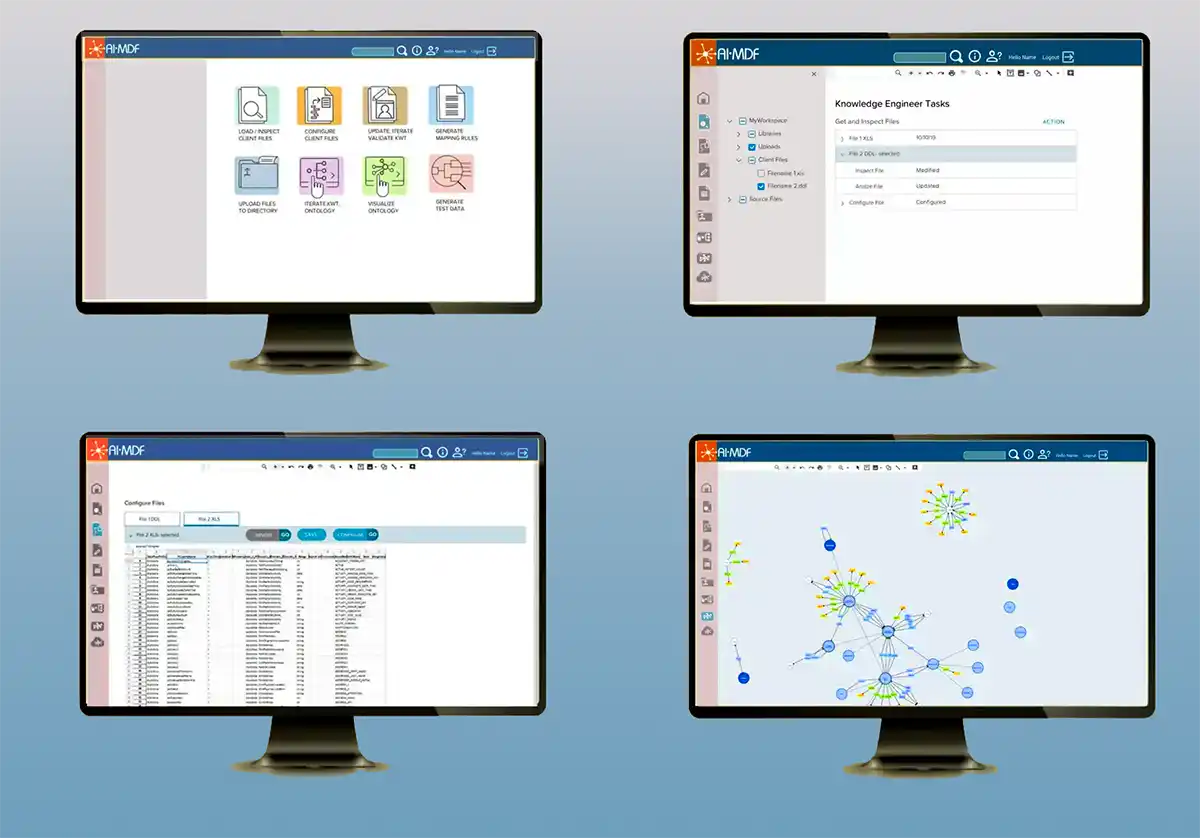
Designed a simplified web flow, markup sequence, and visualization system that allowed non-expert administrators — not just Knowledge Engineers — to create and visualize OWL ontologies from client files.
The Problem
ReactiveCore's AI platform relied on Knowledge Engineers (KEs) to take client data files and manually mark them up to produce OWL ontology files — a highly specialized, time-intensive process. This created a bottleneck: only experts could perform this work, slowing down the pipeline and limiting scale.
The challenge was to design a tool that would allow less-specialized administrators to perform the markup and visualization workflow — without requiring deep knowledge engineering expertise — while still producing accurate, usable OWL output for further diagnostic use.
My Role & Approach
I researched and designed the AI Metadata Factory application, working closely with ReactiveCore's chief ontologist to understand the markup and ontology creation process in depth before translating it into a simplified, guided web interface.
The core design challenge: Ontology creation is inherently complex. The goal wasn't to hide that complexity — it was to sequence it into steps an admin could follow confidently, with the right scaffolding at each stage.
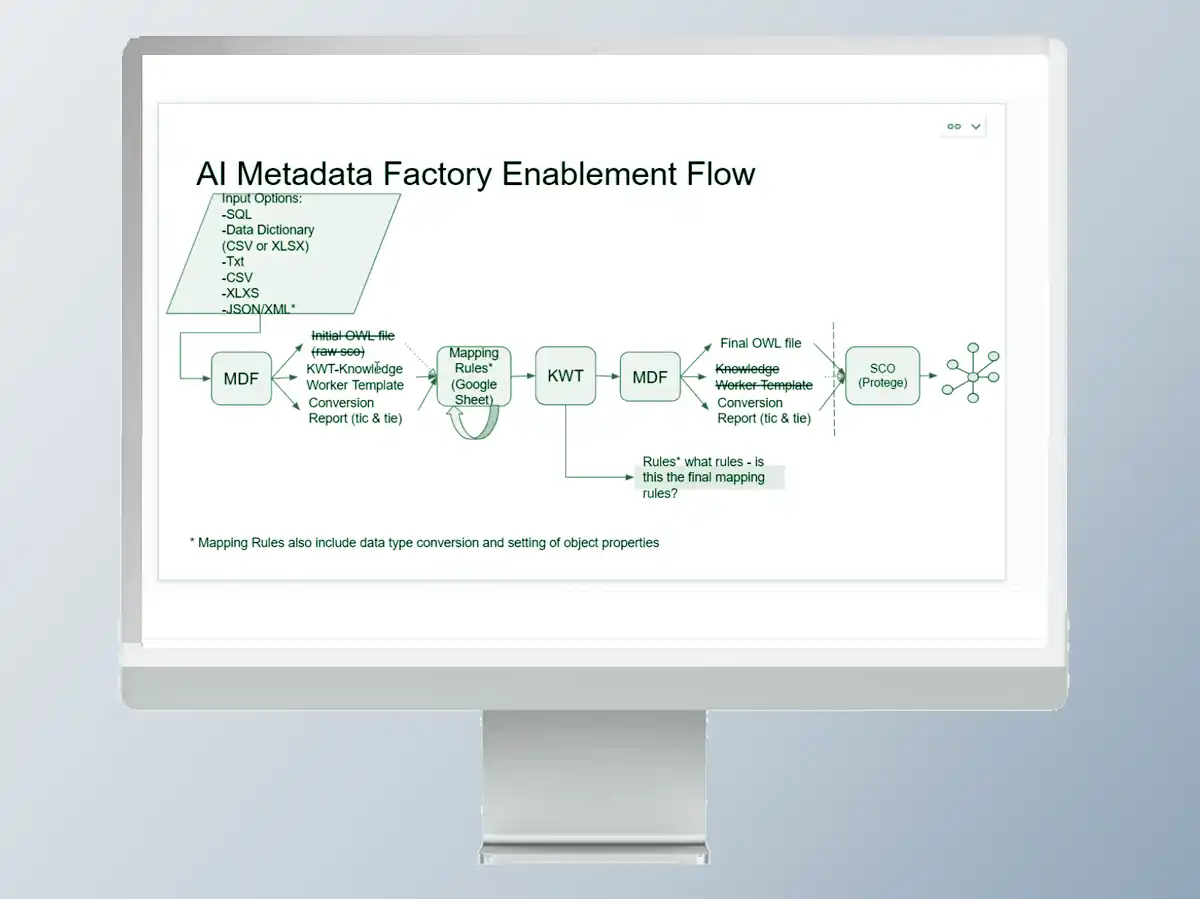
- Deep research sessions with the chief ontologist to map the expert mental model
- Task analysis of the full KE workflow: file intake, markup, OWL generation, visualization
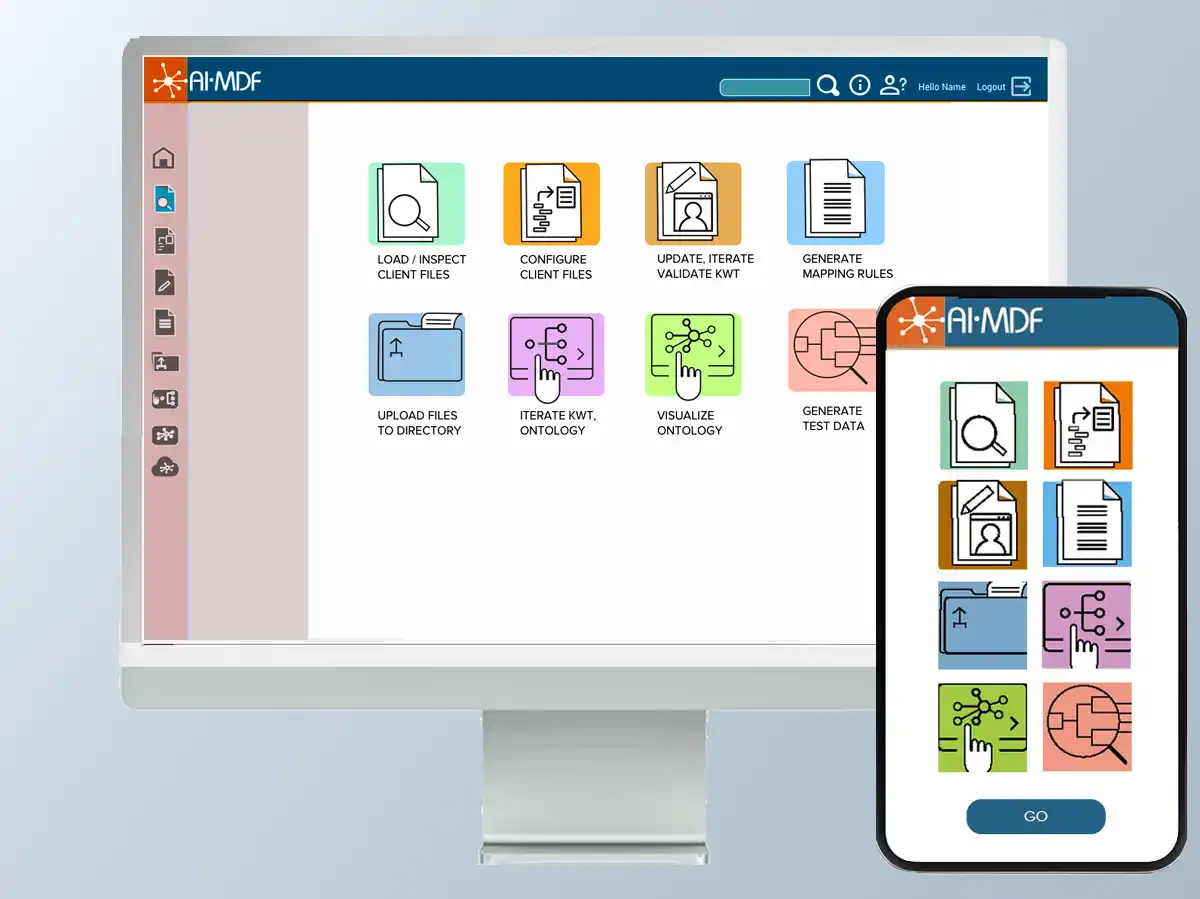
- Designed a simplified step-by-step web flow for non-KE administrators
- Created a guided markup sequence with contextual guidance and validation feedback
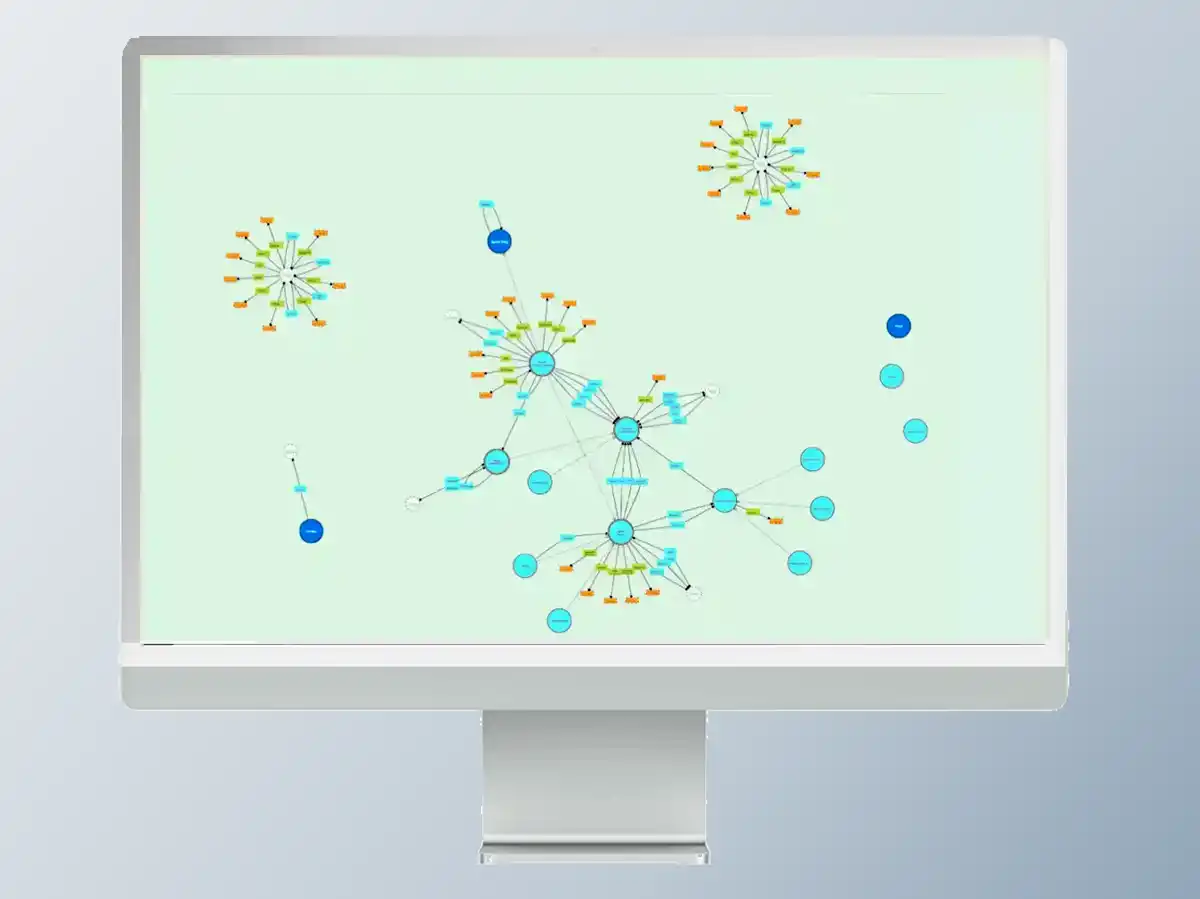
- Designed an ontology visualization interface for reviewing and diagnosing the output
- Conducted prototype testing with users at multiple fidelity stages
Design Highlights
Simplified markup sequence: Rather than exposing the full complexity of OWL markup upfront, the interface walked administrators through a staged process — each step building on the last, with clear progress indication and the ability to review and revise.
Ontology visualization: Once markup was complete, the resulting ontology was rendered as an interactive visual graph — allowing admins and KEs to review relationships, spot gaps, and navigate the structure without reading raw OWL files.
Accessibility to non-experts: Every UI decision was evaluated against the question: "Could an intelligent but non-specialist admin complete this step without calling a Knowledge Engineer?" By the end of testing, the answer was consistently yes.